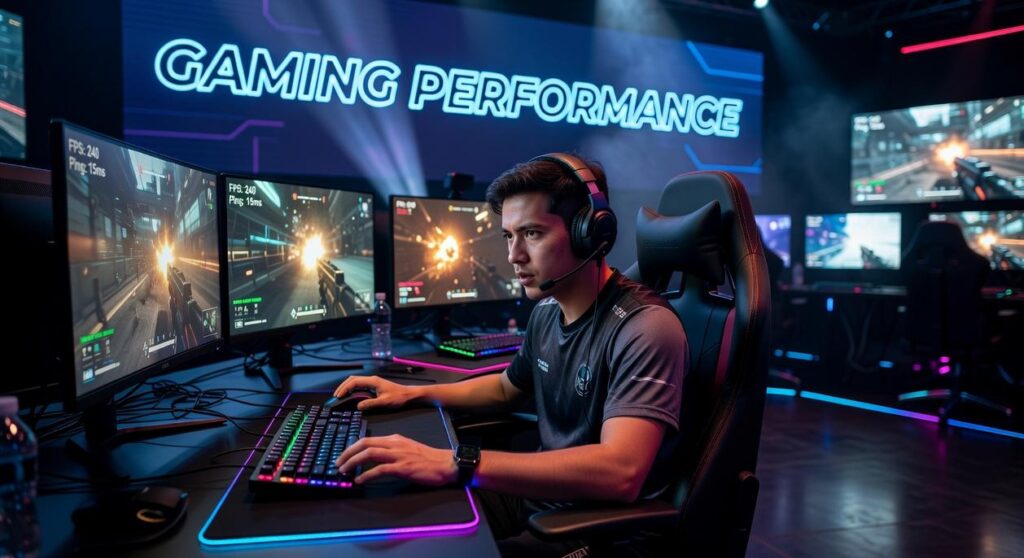

If you’re searching for the ultimate gaming audio equipment setup, you’re likely trying to gain a competitive edge, immerse yourself deeper in your favorite titles, or finally eliminate the frustrating audio issues holding you back. Whether you’re grinding ranked matches, diving into expansive RPG worlds, or competing in esports tournaments, your sound setup can dramatically impact reaction time, communication clarity, and overall performance.
This article breaks down exactly what you need to build a powerful, reliable audio configuration—from headsets and standalone microphones to DACs, mixers, and sound optimization techniques. We focus on practical, performance-driven recommendations rooted in real-world gaming scenarios, not marketing hype.
You’ll learn how different audio components affect spatial awareness, team coordination, and in-game immersion, along with tips to fine-tune your setup for competitive and casual play alike. If better sound means better gameplay to you, you’re in the right place.
Unlock Your Competitive Edge: The Ultimate Gaming Audio Guide
Most gamers stick with default audio settings, leaving faint footsteps, distant reloads, and subtle ability cues buried beneath explosive bass. That muffled rumble might feel cinematic, but it costs rounds.
This guide walks you through a gaming audio equipment setup so every metallic click, fabric rustle, and echoing corridor step lands sharp and directional.
You’ll tune EQ, balance channels, and position your mic for crisp, commanding comms that cut through chaos.
The result? Enemies sound closer, clearer, almost breathing over your shoulder. Configure and you’ll hear danger before you see it.
Your Core Weapon: Choosing the Right Headphones or Headset
Audio isn’t just background noise—it’s positional data, emotional tone, and competitive edge rolled into one. Yet most guides stop at brand names. Let’s go deeper.
1. Gaming Headsets (The All-in-One Solution)
Pros: convenient, integrated mic, plug-and-play simplicity. One cable, minimal fuss. Ideal if you want a clean gaming audio equipment setup without extra gear.
Cons: you often trade raw audio fidelity for branding and RGB. Many models emphasize bass over clarity, which can blur footsteps in competitive titles (a common complaint in esports forums).
2. Studio Headphones + Separate Mic (The Audiophile’s Choice)
Pros: wider soundstage (the perceived 3D space of audio), sharper detail, and often better value per dollar. You hear subtle reverb tails and directional cues others miss.
Cons: more desk space, more cables, and configuration time. Not exactly plug-and-play.
Open-Back vs. Closed-Back
Open-back designs vent air through the earcups, creating a natural, speaker-like sound—perfect for immersive single-player sessions in quiet rooms. Closed-back seals sound in, boosting isolation and focus—crucial for esports or noisy households.
Key Features to Watch
- Larger drivers (typically 40–50mm) for fuller sound
- Balanced frequency response for accurate cues
- Durable build quality for marathon sessions
(Pro tip: prioritize comfort—clamp force matters more than specs after hour three.)
The Foundation: Connecting for Maximum Audio Fidelity

If you care about footsteps in Valorant or the subtle hum of a reactor in Dead Space, your audio chain matters more than you think.
Onboard Audio vs. External DAC/Amp
A DAC (Digital-to-Analog Converter) turns digital game audio (1s and 0s) into an analog signal your headphones can play. An amplifier (amp) boosts that signal so it’s loud and clear.
Your motherboard already has both. The problem? It lives inside a noisy electrical environment—GPU spikes, power fluctuations, and component interference can cause static, buzzing, or muddied sound (that faint hiss isn’t “atmosphere”).
Some argue onboard audio is “good enough.” And for casual play, it can be. But if you’re using mid-to-high-end headphones, you’re likely leaving performance on the table.
Why an External DAC/Amp Matters
An external DAC/Amp sits outside your PC case and:
- Delivers cleaner power
- Reduces electrical interference
- Improves clarity and positional accuracy
The result? Sharper directional cues and tighter bass—critical in competitive shooters.
Connection Types Explained
- 3.5mm jack: Analog. Simple, but prone to motherboard interference.
- USB: Digital signal from PC to DAC. Cleaner and ideal for gaming.
- Optical (TOSLINK): Digital and isolated from electrical noise, but less common on modern gaming gear.
For PC gaming, USB to an external DAC is typically the best balance of quality and convenience.
Step-by-Step Hardware Configuration
- Connect DAC/Amp to PC via USB.
- Plug headphones into the DAC/Amp—not the motherboard.
- Open Sound Settings → Select your DAC as the default playback device.
That’s your core gaming audio equipment setup.
(Pro tip: Disable unused audio outputs in your OS to avoid accidental switching.)
Just like learning how to choose high refresh rate gaming monitor, dialing in audio is about removing bottlenecks—so your gear performs at its peak.
Dialing It In: Software and Equalizer (EQ) Optimization
Before you tweak anything fancy, start simple. Disable all “enhancements.” That means Windows Sonic, spatial sound, bass boost, virtual surround, and any other post-processing effects layered on top of your audio. While they sound impressive on paper, they often add latency (a slight delay between in-game action and what you hear) and muddy directional cues. In competitive shooters, that split second matters. Of course, some players swear by virtual surround. I can’t say it never works—but in most cases, clean stereo wins for clarity.
Next, let’s talk about EQ. An equalizer (EQ) is a tool that adjusts the volume of specific sound frequencies—think of it as fine-tuning treble, mids, and bass individually instead of turning everything up or down at once. For first-person shooters, a common competitive EQ profile lowers bass frequencies below 200Hz to reduce explosion rumble and boosts mid-to-high frequencies around 2kHz–6kHz to highlight footsteps and reload sounds. That said, every headset responds differently, so you may need small tweaks (yes, even the “perfect” preset isn’t universal).
Now, shift to your in-game settings. Choose the “Headphones” or “Stereo” profile, and set Dynamic Range to “High” or “Full” if available. This preserves subtle details that compressed modes can flatten.
Finally, treat your gaming audio equipment setup as a system. Change one variable at a time. Test in a private match. Adjust. Repeat. There’s no flawless formula—but dialing it in thoughtfully beats chasing gimmicks every time.
Crystal-Clear Comms: Optimizing Your Microphone
Great audio wins games. I swear by the “two-finger rule”: place the mic two fingers’ width from your mouth, slightly off to the side to dodge plosives—those harsh bursts from letters like P and B. It sounds minor, but it’s the difference between smooth callouts and Darth Vader breathing in squad chat.
A noise gate mutes background hum when you’re silent, while a compressor evens out volume spikes (your teammates will thank you).
- Run your app’s mic test to confirm you’re clear, not muffled or peaking during gaming audio equipment setup every time.
From Audio Chaos to Tactical Supremacy
No more getting flanked because you didn’t hear the footsteps creeping up behind you. No more garbled callouts drowning in static. By dialing in your gaming audio equipment setup, you turn sound into a COMPETITIVE ADVANTAGE.
Here’s what you gain:
- Faster enemy detection through sharper positional cues
- Clearer team communication in clutch moments
- Deeper immersion that keeps you locked in
The formula is simple: quality hardware, a clean connection, and precise software tuning. That’s the edge.
Ready to hear what you’ve been missing?
Jump into your favorite game and experiment with your EQ until every detail clicks.
You came here to figure out how to level up your gaming audio equipment setup—not just for better sound, but for a real competitive edge. Now you understand how positioning, gear synergy, sound profiling, and engine-level audio cues all work together to sharpen reaction time and immersion.
The difference between guessing and dominating often comes down to what you hear—and how clearly you hear it. Missed footsteps, muddied comms, and unbalanced EQ aren’t small issues; they’re the pain points holding your performance back.
Lock In Your Competitive Edge
Don’t let poor audio cost you another ranked match. Upgrade your gaming audio equipment setup with proven configurations trusted by competitive players and backed by top-rated tech breakdowns. We’re one of the fastest-growing sources for deep-dive gaming gear insights because we focus on what actually improves in-game performance.
Dial in your setup now, apply the tweaks you’ve learned, and experience the difference the next time you queue up. Your opponents won’t know what changed—only that you’re reacting faster than ever.
 Founder & CEO
Ask Koralia Tornhanna how they got into mag-based game engine explorations and you'll probably get a longer answer than you expected. The short version: Koralia started doing it, got genuinely hooked, and at some point realized they had accumulated enough hard-won knowledge that it would be a waste not to share it. So they started writing.
What makes Koralia worth reading is that they skips the obvious stuff. Nobody needs another surface-level take on Mag-Based Game Engine Explorations, Hot Topics in Gaming, Core Mechanics and Playstyles. What readers actually want is the nuance — the part that only becomes clear after you've made a few mistakes and figured out why. That's the territory Koralia operates in. The writing is direct, occasionally blunt, and always built around what's actually true rather than what sounds good in an article. They has little patience for filler, which means they's pieces tend to be denser with real information than the average post on the same subject.
Koralia doesn't write to impress anyone. They writes because they has things to say that they genuinely thinks people should hear. That motivation — basic as it sounds — produces something noticeably different from content written for clicks or word count. Readers pick up on it. The comments on Koralia's work tend to reflect that.
Founder & CEO
Ask Koralia Tornhanna how they got into mag-based game engine explorations and you'll probably get a longer answer than you expected. The short version: Koralia started doing it, got genuinely hooked, and at some point realized they had accumulated enough hard-won knowledge that it would be a waste not to share it. So they started writing.
What makes Koralia worth reading is that they skips the obvious stuff. Nobody needs another surface-level take on Mag-Based Game Engine Explorations, Hot Topics in Gaming, Core Mechanics and Playstyles. What readers actually want is the nuance — the part that only becomes clear after you've made a few mistakes and figured out why. That's the territory Koralia operates in. The writing is direct, occasionally blunt, and always built around what's actually true rather than what sounds good in an article. They has little patience for filler, which means they's pieces tend to be denser with real information than the average post on the same subject.
Koralia doesn't write to impress anyone. They writes because they has things to say that they genuinely thinks people should hear. That motivation — basic as it sounds — produces something noticeably different from content written for clicks or word count. Readers pick up on it. The comments on Koralia's work tend to reflect that.