

Looking for a clear breakdown of Modular asset graph systems and how they’re reshaping modern game development? You’ve found it. Game worlds keep getting more complex. Player expectations keep climbing. Developers need smarter ways to manage assets, streamline workflows, and optimize performance, all without losing the creative flexibility that makes games actually feel alive.
Modular asset graph systems are built to handle how contemporary engines manage and distribute assets across platforms. They’re crucial for scaling gameplay, pushing live updates, and making sure your game runs the same on PC, console, and mobile. The real win is simple: build once, deploy everywhere. You cut redundant assets and let your team iterate faster without breaking what’s already live. New mechanics get tested. Experiments don’t tank your live build. Whether you’re shipping a competitive shooter or a casual puzzle game, these systems keep everything connected and synchronized, which matters when you’re actually balancing live content updates against technical debt.
This guide pulls from engine documentation, developer insights, and real-world implementation examples from active projects. You’re tightening your pipeline. Maybe you’re a gamer who wants to know what actually drives modern games. Either way, you’ll get practical, actionable insight into how these systems work, grounded in what real engineers and studios have learned works.
Modern game development often resembles a Jenga tower: pull one asset, everything wobbles. That’s what we call “asset dependency”, those hidden links where textures, scripts, and audio rely on each other. In a traditional pipeline, asset Web A ties everything together; change a shader and ten scenes break. Modular asset graph systems work differently. They treat components like LEGO bricks, self-contained and swappable. Update a character model and the level lighting stays put because links are actually mapped. Sure, it adds upfront complexity. Graphs reduce chaos long term, though. Document node rules early. That matters. Think less house of cards, more like the Avengers assembling, independent, coordinated, doing their own thing without pulling down the whole operation.
Beyond prefabs: the core philosophy of asset graphs
For years, developers leaned on prefabs—prebuilt, static bundles of assets and logic. Useful? Absolutely. Flexible? Not really. An asset graph moves past that limitation. It’s a dynamic network of nodes (individual assets like models, sounds, or VFX) connected by edges (the relationships and dependencies between them). Instead of one frozen object, you get a living system.
Here’s the competitive edge most teams overlook: modularity at scale. In modular asset graph systems, a character’s Armor node can be swapped without disrupting the Base model or Animation nodes it connects to. Fewer cascading errors. Dramatically faster iteration. Anyone who’s broken a prefab chain five minutes before a build knows the pain.
Critics argue graphs add complexity, and they’ve got a point, visual networks can look like conspiracy boards from a detective drama. But here’s the thing: that complexity is structured. Structure unlocks interchangeability.
The real power lies in data-driven separation. The graph tells you what assets get used. The engine code tells you how they behave. Nothing’s hard-coded into the gameplay scripts, no welded-in references that’ll haunt you later.
Picture a weapon graph: the Receiver sits at the hub, with swappable Stock, Barrel, and Optic nodes branching out. Each one carries its own stats, model, and sound data, independent yet wired together. That’s customization. But it’s also something deeper—a system built to scale. Every component talks to every other component without the whole thing falling apart. You swap a Barrel. The sound changes. The recoil curve shifts. Nothing breaks. That’s the engineering win.
Three breakthrough systems for building your graph
System 1: tag-based & rule-driven assembly
Instead of hard-linking assets together, this system lets nodes request what they need using descriptive tags, Faction:Orc, Tier:Heavy, Element:Fire. A rule engine evaluates those conditions and returns matching results at runtime. It’s like a casting director pulling actors based on roles rather than pre-assigning the whole movie months ahead of time.
Critics argue this adds unnecessary complexity. Why not just wire assets directly and move on? Fair point. Direct references are simple and predictable. But they’re also rigid. When balance patches hit or content updates roll out, tag-driven systems adapt instantly without breaking dependencies. In live-service games, that flexibility isn’t a luxury—it’s survival.
Pro tip: Keep your tag taxonomy clean and documented early. Chaos in naming becomes chaos in output. Nobody enjoys debugging “OrcHeavy Final V7”. Seriously.
System 2: procedural graphs for content generation
Here, the graph doesn’t just assemble assets, it creates them. Combine base meshes, layered materials, and procedural damage masks, and a single setup spawns thousands of prop variations. Games like No Man’s Sky rely on procedural generation (algorithmic content creation instead of manual design) to pull off the impossible: entire planets built from math, not artists’ hands (Hello Games, GDC talks).
Skeptics say procedural content feels soulless, and yeah, badly tuned systems absolutely look repetitive. But when artists actually control the parameters, something shifts. Procedural graphs amplify creativity instead of replacing it. Modular asset graph systems prove it works. You feed in small curated inputs. Massive expressive outputs come back. That’s the payoff.
System 3: live-sync & hot-reloading in-engine
Edit the graph while the game runs, and you’ll see your changes instantly. No compile-wait-test loop. It’s real-time iteration. Some worry hot-reloading destabilizes things, fair enough if your safeguards are sloppy. But modern engines, the ones from Epic Games and Unreal included, have built solid live update systems that make this work. Safe now. Actually reliable.
The result? Faster tuning, happier designers, and tighter feedback loops—core principles behind building dynamic worlds using node based systems (https://zeromagtech.net/building-dynamic-worlds-using-node-based-systems/).
In fast-moving production pipelines, speed isn’t optional. It’s everything.
I need the actual paragraph text to rewrite. The input you’ve provided is just a headline/title, not a full prose paragraph suitable for stylistic editing.
Please paste the paragraph you’d like me to edit.
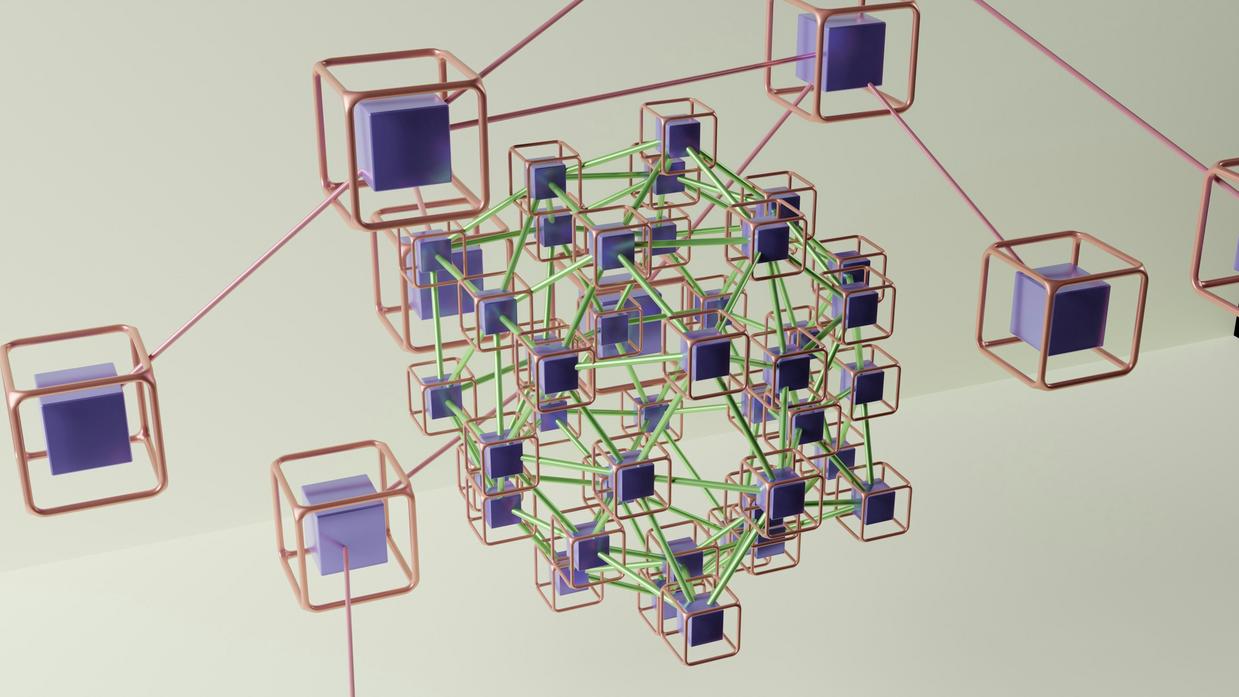
Modern studios are increasingly adopting modular asset graph systems to break production bottlenecks—and the results are measurable. According to the 2023 State of Game Technology report by Perforce, teams using node-based workflows reduced integration bugs by up to 30%. That’s not a marginal gain; that’s weeks of reclaimed development time.
Empowering artists & designers
Graph-based tools let non-programmers prototype enemies, weapons, and characters by linking nodes visually. Unreal Engine’s Blueprint system does this, entire gameplay features get built without touching C++. Iteration gets faster. Designers get creative control back. And yeah, fewer Slack messages asking “Can engineering hook this up?” A designer can drag a “take damage” node, wire it to an animation, connect that to a sound effect, and test it in minutes. That’s the real win.
- Faster prototyping cycles
- Reduced dependency on engineering queues
- Greater experimentation with mechanics
Streamlining engineering
For programmers, graphs do something simple: they decouple systems and kill hard references. Tangled dependencies? Gone. Instead, engineers build interpreters that read structured data. A 2022 Unity case study found teams slashing technical debt remediation time by nearly 25% after switching to modular architectures. That’s not trivial.
Accelerating iteration & QA
Swapping a single node isolates bugs quickly. That modularity’s gold in live-service environments, it’s what lets you run A/B tests at speed. Minor balance tweaks move the needle on player retention. Sometimes just a few percentage points, which sounds small until you’re watching churn numbers actually improve. But those points matter. They compound.
Building your first graph: overcoming common hurdles
The biggest mistake? Building everything at once. You start with a tidy node, then another, and suddenly you’re staring at a tangled web that feels like spaghetti sliding off the plate. That’s the over-engineering trap, and it smells like burnout.
Start small. Focus on one system, like a character skin swap or weapon mod, and prove it works. In modular asset graph systems, restraint is power.
Define your data contract early. In Unity, use Scriptable Objects; in Unreal, data Assets. Keep inputs clean, predictable, testable.
Your first project: a modular Health Pickup.
• START SMALL
• Swap model, particles, sound
The monolithic, tightly coupled asset pipelines of the Unreal Engine 4 era, where one broken shader could stall an entire build, don’t work anymore. Live-service games, cross-platform titles, they demand better. Scale changes everything, and what worked five years ago snaps under pressure now. Composable thinking replaces those brittle chains with modular asset graph systems. Teams iterate faster. Smoother. Like a well-synced esports roster, really (no single point of failure). That’s the whole point.
- Faster iteration across art, code, and design
- Cleaner dependency tracking for massive open worlds
- Real-time collaboration without version-control nightmares
This shift isn’t cosmetic. It’s foundational. Better pipelines mean better games, built smarter, not harder.
Level up your play with smarter systems
You came here to understand how today’s gaming ecosystems work. How they’re changing. What modular asset graph systems actually mean for game development. And you’ve seen it firsthand, the way these systems reshape performance, unlock new creative possibilities, keep competition fair. They even determine which gear you’ll reach for next. But here’s what matters: it’s not theoretical anymore.
If you’ve felt overwhelmed by shifting metas, underperforming setups, or confusing engine jargon, you’re not alone. The real problem isn’t passion. It’s that you don’t have clear, practical insight you can actually use.
The good news? You’ve got what you need to adapt. Apply these insights to how you play, optimize your tech stack, stay ahead of what the engine throws at you. That’s the difference between just reacting to every change and actually controlling the game.
Want to sharpen your edge? Our latest breakdowns go deeper, you’ll find advanced system guides and setup upgrades you can actually trust. Thousands of competitive players and tech-savvy gamers come here for battle-tested insights. No fluff. Just what works. Start optimizing today, and watch your sessions improve faster than you’d expect.
 Marketing & Strategy Lead
Michaeliv Roldanakurt writes the kind of tech-driven gaming gear tips content that people actually send to each other. Not because it's flashy or controversial, but because it's the sort of thing where you read it and immediately think of three people who need to see it. Michaeliv has a talent for identifying the questions that a lot of people have but haven't quite figured out how to articulate yet — and then answering them properly.
They covers a lot of ground: Tech-Driven Gaming Gear Tips, Mag-Based Game Engine Explorations, Hot Topics in Gaming, and plenty of adjacent territory that doesn't always get treated with the same seriousness. The consistency across all of it is a certain kind of respect for the reader. Michaeliv doesn't assume people are stupid, and they doesn't assume they know everything either. They writes for someone who is genuinely trying to figure something out — because that's usually who's actually reading. That assumption shapes everything from how they structures an explanation to how much background they includes before getting to the point.
Beyond the practical stuff, there's something in Michaeliv's writing that reflects a real investment in the subject — not performed enthusiasm, but the kind of sustained interest that produces insight over time. They has been paying attention to tech-driven gaming gear tips long enough that they notices things a more casual observer would miss. That depth shows up in the work in ways that are hard to fake.
Marketing & Strategy Lead
Michaeliv Roldanakurt writes the kind of tech-driven gaming gear tips content that people actually send to each other. Not because it's flashy or controversial, but because it's the sort of thing where you read it and immediately think of three people who need to see it. Michaeliv has a talent for identifying the questions that a lot of people have but haven't quite figured out how to articulate yet — and then answering them properly.
They covers a lot of ground: Tech-Driven Gaming Gear Tips, Mag-Based Game Engine Explorations, Hot Topics in Gaming, and plenty of adjacent territory that doesn't always get treated with the same seriousness. The consistency across all of it is a certain kind of respect for the reader. Michaeliv doesn't assume people are stupid, and they doesn't assume they know everything either. They writes for someone who is genuinely trying to figure something out — because that's usually who's actually reading. That assumption shapes everything from how they structures an explanation to how much background they includes before getting to the point.
Beyond the practical stuff, there's something in Michaeliv's writing that reflects a real investment in the subject — not performed enthusiasm, but the kind of sustained interest that produces insight over time. They has been paying attention to tech-driven gaming gear tips long enough that they notices things a more casual observer would miss. That depth shows up in the work in ways that are hard to fake.