
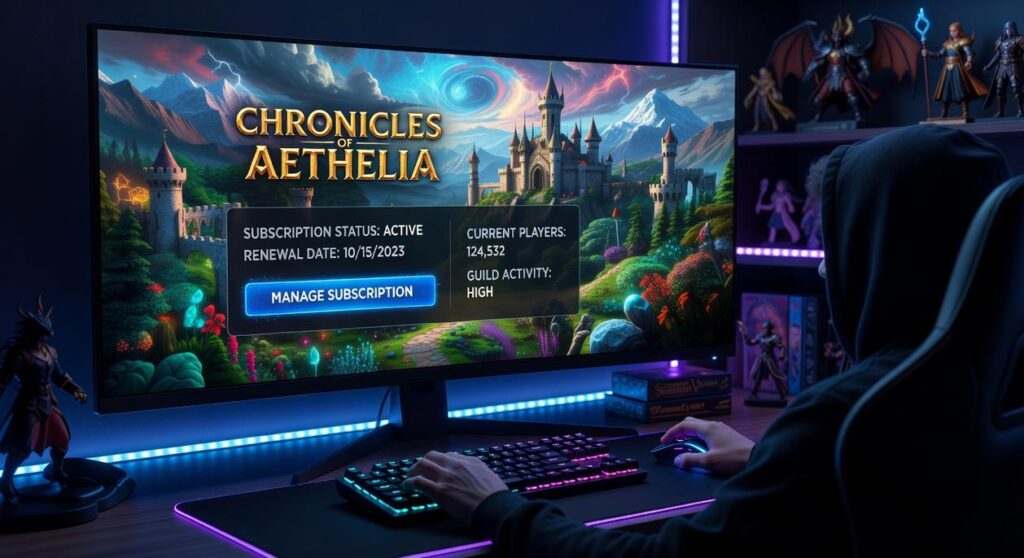
The Live service games model has completely changed how players experience modern gaming. You don’t buy a game once and move on anymore. Instead, you’re stepping into worlds that keep evolving for months, sometimes years. If you’ve wondered how it actually works, why studios are so obsessed with it, or whether it’s genuinely good for players or just a revenue machine, well, those are solid questions. And worth asking.
Live service design rests on a few core mechanics. Seasonal content drops. Battle passes generate predictable revenue streams. Monetization loops fund ongoing development. But honestly, it’s not just about drip-feeding players new stuff, the design philosophy cascades into everything else. Balance patches, player retention rates, competitive meta at the pro level, which streamers stick with the game versus which ones move on. Each decision bleeds into the others. Here’s where it gets interesting: understanding how those pieces actually connect.
We’ve spent years working directly with game studios, watching esports scenes shift, and tearing into how modern titles actually work under the hood. What emerges is simple: live service design reshapes everything you play. It costs you time. It throttles progression speed. It demands money. And this paragraph walks you through exactly why, and what you can do about it.
The allure of changing digital worlds
As developers continue to innovate in the realm of live service games, players are seeing more dynamic and interactive experiences that keep them coming back for more, much like the exciting new features and content found in the latest updates from Scookiegear by Simcookie – for more details, check out our Scookiegear Latest Updates By Simcookie.
A traditional game ends. Credits roll. Shelf life: finite. But subscription games, built on the Live service model, promise something different, a world that actually grows with you. Like a TV series that won’t kill off its best character, no matter how long it runs.
But not all subscriptions are equal.
- Game A: Predictable seasonal drops, recycled quests, steady but shallow updates.
- Game B: Major expansions, evolving metas, meaningful mechanical shifts.
Some argue any recurring fee is a grind trap. That’s not wrong. But here’s the thing: consistent, high-quality updates actually do justify the cost, assuming the core mechanics align with how you like to play, not just how long you’re willing to stick around.
Why pay monthly? The core value of a live service game
A subscription’s really a two-way deal. Players pay each month. Developers promise consistent updates, stable servers, meaningful expansions, and the whole thing only works if both sides hold up their end. In live service games, that steady cash flow actually funds a real roadmap instead of the old model where you ship once and pretend you’re done. Three months later? Empty lobbies. Ghost towns. Nobody wants that, which is why developers who go dark end up with nothing.
Beyond the box price, you’re buying:
- Ongoing narrative arcs that unfold like seasonal anime cours
- New zones, raids, and rotating world events
- Updated mechanics, class reworks, and meta balancing patches
Some argue subscriptions feel outdated in a free-to-play era, and honestly, that’s a fair point. But here’s the thing: free access usually pushes cosmetic shops or power creep instead. A monthly structure? It lets you prioritize long-term systems design over chasing flash sales.
The real payoff is community. Persistent shards, evolving guild politics, and patch-day theorycraft in Discord, they create worlds that actually shift over months and years. That kind of continuity? Hard to replicate, especially when you’ve got tight-knit PvE groups or esports-adjacent scenes where everyone knows everyone else’s meta.
Kings of the genre: mmorpgs that define the subscription model

Subscription-based MMORPGs spark plenty of debate. Some players argue the model’s outdated, why pay monthly when so many games cost nothing upfront? Fair point. But look at the genre’s heavyweights, the ones that’ve sustained millions of players for a decade or more while building out raid tiers, new zones, cosmetics, and seasonal events that wouldn’t exist without predictable cash flow. They prove what works: consistent funding builds consistent quality. Live service games especially need that steady revenue stream, or the whole operation collapses. You can’t keep the lights on without it.
World of warcraft: the unquestioned titan
World of Warcraft (WoW) remains the benchmark. The formula’s simple but relentless: major expansions every couple of years, backed by substantial content patches that drop raids (large-scale endgame dungeons for organized groups), smaller dungeons, and evolving story arcs. Activision Blizzard’s earnings reports show WoW sustaining millions of subscribers across multiple expansions, an unmatched track record in the genre. Nothing else comes close.
Critics say WoW feels cyclical. And yes, the expansion-reset loop isn’t for everyone. However, that structure gives players a clear roadmap.
Practical tip: If you’re returning, skip straight to the latest expansion and follow the main campaign questline first. Then:
- Unlock endgame systems.
- Join a casual guild.
- Target entry-level raids before mythic content.
(Think of it like training for a marathon, you don’t sprint on day one.)
Final fantasy xiv: the narrative powerhouse
Final Fantasy XIV is gaming’s ultimate comeback story. A disastrous 1.0 launch nearly killed it. But the team rebuilt from the ground up, and now it’s a critically acclaimed RPG that’s earned multiple Game Awards nominations and wins. What sets it apart? The major patches don’t feel like routine content drops, they’re more like episodic TV seasons, each one packed with story that keeps you coming back.
Some argue it’s “too story focused.” But that’s exactly the draw.
Jump into the free trial. You’re getting the base game plus multiple expansions at zero cost. Work through the Main Scenario Quest without worrying about optimization or min-maxing every decision. Treat it like a single-player JRPG first, because the MMO stuff, guilds, raids, the whole social layer, comes later, once you’ve actually learned what you’re doing.
The elder scrolls online: the flexible alternative
The Elder Scrolls Online (ESO) sits somewhere in the middle. You get DLC access with an ESO Plus subscription, plus that legendary crafting bag, unlimited material storage that changes everything for serious players. Sure, you can buy expansions one at a time if you’d rather not subscribe. But if you craft a lot? The subscription pays for itself fast.
Example: If your inventory constantly fills with crafting materials, calculate your monthly time saved managing storage. Convenience alone often justifies ESO Plus.
In the end, subscriptions endure because they fund depth. Free can be tempting, but consistency builds kingdoms.
Beyond fantasy: niche subscriptions with dedicated followings
For the simulation purist – iracing
If you think racing games should feel less like an arcade cabinet and more like a motorsport apprenticeship, iRacing is your answer. Its subscription unlocks laser-scanned tracks (digitally recreated circuits using millimeter-accurate data), meticulously modeled cars, and a safety rating system that rewards clean driving. New seasons, vehicles, and physics tweaks roll out constantly, it’s built on a live service model that never really stops evolving.
Some argue the subscription plus per-car purchases are pricey. Fair enough. But here’s the thing, no other platform blends realism, ranked competition, and a thriving esports ladder quite like this one. It’s closer to FIA than Forza, honestly. Less a game, more a structured motorsport ecosystem.
- Constantly updated tracks
- Competitive ranked splits
- Sanctioned esports events
This is a service-first simulation.
For the sci‑fi explorer – EVE online
EVE Online’s “Omega” subscription speeds up skill training, that real-time progression keeps advancing even when you’re not playing, and unlocks advanced ships plus industrial tools. The learning curve? Brutal. Genuinely brutal. But that’s exactly what powers the player-driven economy, where territorial wars send markets into chaos and alliances can topple entire empires. It’s sci-fi wrapped in spreadsheets. Somehow, that’s the whole appeal.
If you’re curious how shared ecosystems evolve across platforms, see rise of cross platform play what it means: https://zeromagtech.net/rise-of-cross-platform-play-what-it-means/.
Your personal checklist: is a game’s subscription worth it for you?
First, analyze the content cadence. How often does the game ship meaningful updates? Quarterly patches? Bi-annual expansions? If you log in weekly, will there actually be something new to do, or are you replaying the same dungeon like it’s a rerun? Live service games promise steady updates. Does this one deliver? That’s the real question. Some players get quarterly content drops. Others wait months between patches. The difference between a thriving live service and a dead one often comes down to this single metric, whether the developer actually keeps feeding the game, or just lets it coast on launch momentum.
Next, evaluate the core gameplay loop, those repeatable actions you do minute to minute. Do you genuinely enjoy combat? Crafting? Matchmaking? Because here’s the thing: no roadmap can fix gameplay that feels like homework. Sound familiar?
Then, check the community vitals. Are forums active? Are matchmaking queues fast? A healthy player base often signals longevity (and fewer ghost towns).
Finally, calculate your cost-per-hour. If it’s $15 a month and you play 20 hours, that’s $0.75 per hour. Stack that against movies or other hobbies, it’ll probably look pretty good. Pro tip: track your playtime for one month before committing.
Choosing Your Next Digital Home
Subscription games aren’t just software; they’re evolving hobbies and living communities. In other words, you’re not buying access—you’re choosing a routine. Some argue all live service games feel the same, built on the live service games model and endless updates. Yet that misses the nuance. The real decision comes down to: 1. Core mechanics, 2. Update philosophy, 3. Community culture. Looking ahead, I suspect studios will double down on seasonal storytelling—speculation, but a likely shift. So use the checklist to weigh your options and invest in a world you’ll gladly return to for years ahead.
Level up your strategy in today’s evolving gaming landscape
You came here wanting to understand how modern gaming trends, competitive metas, and evolving mechanics reshape the way we play. And here’s what you’ve learned: core systems aren’t just background noise. Esports dynamics shift player expectations overnight. The live service model? It’s the engine that keeps people coming back month after month, or walking away entirely. They’re all connected, redefining what sticks and what doesn’t.
If you’re not adapting, you’re falling behind. Games evolve fast. Really fast. Patches shift metas overnight, engines introduce new possibilities, and gear upgrades can separate average players from elite ones. Go static long enough, and you’ll lose your edge before you even realize it’s gone. That’s just how it works.
The smart move? Stay informed, analyze updates critically, and refine your playstyle with every shift in mechanics or balance changes. Track esports trends. Experiment with new builds. Optimize your setup so your performance matches your ambition.
Want to actually master modern games instead of just grinding through them? Serious competitors don’t rely on guesswork. They learn from trusted breakdowns of mechanics, metas, and the tech underneath, the stuff that separates wins from wasted hours. Thousands of players swear by expert analysis and real strategies, the kind that actually translate into wins. Dive deeper into what works. Sharpen your skills. Then go dominate your next match.
 Creative Director
There is a specific skill involved in explaining something clearly — one that is completely separate from actually knowing the subject. Lorraines Pricevadan has both. They has spent years working with expert insights in a hands-on capacity, and an equal amount of time figuring out how to translate that experience into writing that people with different backgrounds can actually absorb and use.
Lorraines tends to approach complex subjects — Expert Insights, Core Mechanics and Playstyles, Tech-Driven Gaming Gear Tips being good examples — by starting with what the reader already knows, then building outward from there rather than dropping them in the deep end. It sounds like a small thing. In practice it makes a significant difference in whether someone finishes the article or abandons it halfway through. They is also good at knowing when to stop — a surprisingly underrated skill. Some writers bury useful information under so many caveats and qualifications that the point disappears. Lorraines knows where the point is and gets there without too many detours.
The practical effect of all this is that people who read Lorraines's work tend to come away actually capable of doing something with it. Not just vaguely informed — actually capable. For a writer working in expert insights, that is probably the best possible outcome, and it's the standard Lorraines holds they's own work to.
Creative Director
There is a specific skill involved in explaining something clearly — one that is completely separate from actually knowing the subject. Lorraines Pricevadan has both. They has spent years working with expert insights in a hands-on capacity, and an equal amount of time figuring out how to translate that experience into writing that people with different backgrounds can actually absorb and use.
Lorraines tends to approach complex subjects — Expert Insights, Core Mechanics and Playstyles, Tech-Driven Gaming Gear Tips being good examples — by starting with what the reader already knows, then building outward from there rather than dropping them in the deep end. It sounds like a small thing. In practice it makes a significant difference in whether someone finishes the article or abandons it halfway through. They is also good at knowing when to stop — a surprisingly underrated skill. Some writers bury useful information under so many caveats and qualifications that the point disappears. Lorraines knows where the point is and gets there without too many detours.
The practical effect of all this is that people who read Lorraines's work tend to come away actually capable of doing something with it. Not just vaguely informed — actually capable. For a writer working in expert insights, that is probably the best possible outcome, and it's the standard Lorraines holds they's own work to.