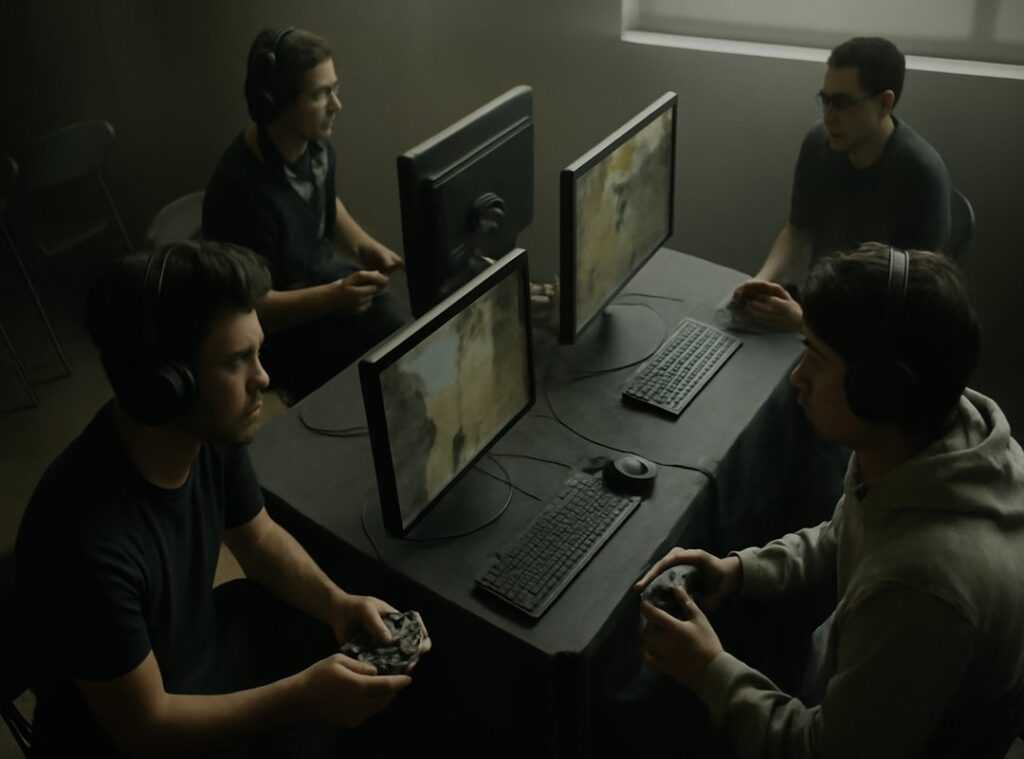

If you’re here, you probably want to know how game balance actually works. Why your favorite titles feel the way they do. Why they flow like they do. Maybe you’re a competitive player tracking meta shifts, or casual and just tired of running into overpowered builds. Maybe you’re building games yourself and need to understand the core mechanics. Whatever your angle, balance matters. It’s the difference between a game that sings and one that frustrates you to quit.
Balanced gameplay rests on a few things: risk-reward tuning that makes every choice matter, skill expression separating good players from great ones, counterplay systems that stop any single strategy from dominating, and meta sustainability keeping the game fresh over years, not weeks. Here’s what that looks like. Using competitive and mechanics-driven titles as test cases, we’ll trace how a single balance decision ripples out into playstyles, esports viability, and player retention. The details matter more than you’d think.
We’ve dug through patch notes, competitive stats, and how the scene’s actually evolved over the years. By the time you’re done reading, you’ll know how to spot a balance change that works, and which ones blow everything up. Most of it comes down to recognizing patterns. Not rocket science.
The art and science of fair play
Balance gets reduced to surface-level adjustments, tweak the damage numbers, fiddle with health pools. That’s missing the point entirely. Real balance is structural harmony, where every system props up the next one so nothing tips the whole game into a one-button win. Nobody wants that. Not players, not designers. The depth comes from dependencies, from each mechanic being just strong enough to matter and just weak enough to challenge the others.
Breaking down balance
Risk vs. Reward is straightforward: higher payoff demands higher danger. Counterplay means you can actually respond to what your opponent throws at you. Skill expression, that’s where the best players separate themselves through genuine mastery. Risk, counterplay, skill expression. They’re baked into every game that lasts. Chess has all three, which is partly why it’s still around after 1,500 years. Most games that vanish within months? They’re missing at least one of them.
Defining the battlefield: what is game balance?
First, understand that balance is not perfect equality. The goal is not to make every character or weapon identical, but to ensure every choice is viable in the right context. In other words, balance means meaningful options—not clones with different skins.
Symmetric Balance hands every player identical tools. Chess, StarCraft mirror matches, same principle. You win or lose based on execution, knowledge, and how well you adapt to what your opponent throws at you. That’s the competitive clarity at work here. Lose a game? It’s your strategy that failed, not some hidden advantage you didn’t know about, and that distinction matters.
Asymmetric Balance powers most modern games, hero shooters, MOBAs, even your favorite battle royale. Each character comes with its own set of strengths and weaknesses. They clash, they counter, they shift the entire match. It’s harder to design, sure. But the payoff? Replayability that keeps you coming back. Evolving metas. Room for that weird off-meta pick that somehow works anyway and shocks your entire team.
The ultimate objective is strategic diversity. Strong game balance design principles ensure:
- Multiple viable strategies
- Long-term player engagement
- A healthier competitive scene
When balance works, players experiment more, improve faster, and stay invested longer.
Principle #1: the unbreakable law of risk vs. Reward
Every competitive system worth playing has one rule at its core: power costs you something. That risk-reward balance isn’t theoretical. Any move that could win the game has to come with genuine teeth, with real cost, with meaningful limitation attached. You don’t get both the upside and safety. It doesn’t work that way, and any designer who pretends otherwise is lying.
Picture a sniper rifle in an FPS. One shot. One kill. The payoff’s massive, but you’re slow, can’t fire fast, and your vision narrows down to a tunnel. You trade one thing for another. Always. Then there’s that screen-clearing spell in RPGs: devastating damage, sure, but it eats your rare mana or locks you into a long cast animation that leaves you exposed. And that’s exactly when the boss charges.
Some argue that players naturally self-balance and will avoid overpowered tools. That rarely works out. When something’s low risk and high reward, you get the dominant strategy problem, everyone gravitates toward the same option. Creativity collapses. The meta hardens. Variety dies.
Here’s what I recommend:
- Audit every high-impact ability — What is the real cost?
- Stress-test edge cases — Can skilled players bypass intended weaknesses?
- Force meaningful trade-offs — Mobility vs. damage, safety vs. output.
These are foundational game balance design principles. If you want deeper insight into long-term engagement, study how progression systems shape player motivation.
Pro tip: If an ability feels “too fun to nerf,” it’s probably masking a missing cost.
Principle #2: every action needs a reaction
A balanced game breathes. It’s a system where nothing dominates without consequence, where every move has a counter. Designers call this the Principle of counterplay, the idea that no strategy should exist without a viable response. One esports coach nailed it during a post-match breakdown: “If there’s no answer, there’s no strategy, just abuse.”
Imagine a player builds an unstoppable tank. High armor. Massive health pool. Crowd-control immunity. Sounds fun, until everyone else quits. A well-designed system needs an anti-tank option, armor-piercing rounds, mobility-based kiting, or debuffs that shred defenses. That’s rock-paper-scissors at work, the playground game that still teaches the best design lessons.
But here’s the thing: some players swear by hard counters for the simplicity. “If they pick that hero, I pick this one. Done,” one ranked player told me. Clean. Simple. And yeah, they’ve got a point, there’s something genuinely satisfying about a matchup so lopsided that you already know who’s winning before anyone loads in. The outcome feels predetermined, and for players who don’t want to think past champion select, that’s exactly what they’re after.
The problem? Hard counters erase agency. When a choice becomes an automatic loss, you don’t have a meta, you have a checklist.
Meaningful counterplay should create advantages, not guarantees:
- Strong against tanks, weak against assassins
- Great at range, vulnerable up close
- High damage, low survivability
That tension forces adaptation. And adaptation is where mastery lives.
Principle #3: Balancing for Beginners and Grandmasters
Great balance doesn’t pick sides; it SERVES the whole ladder. Designers often frame this through two ideas: skill floor and skill ceiling.
Skill Floor means the barrier to entry. Can a newcomer grab a character and contribute within minutes, or do they just flail around like they’re button-mashing their way through a fighting game? Low floor. Accessibility. That’s what it buys you.
Skill ceiling’s the opposite end of that spectrum, it’s how far mastery can actually stretch. Does practice unlock deeper combos, tighter timing, smarter reads? When a game’s got a high ceiling, it fuels esports dreams. Players keep grinding because there’s always another layer to discover.
Compare two designs:
- Character A: LOW skill floor, LOW skill ceiling , easy to start, but mastery plateaus quickly.
- Character B: HIGH skill floor, HIGH skill ceiling , brutal early, rewarding later.
Neither alone sustains a healthy meta. The sweet spot? Easy to learn, difficult to master. Think chess: simple moves, infinite depth.
Critics argue catering to beginners “dumbs down” competition. Others claim high ceilings scare off newcomers. Both miss that smart tuning blends access and aspiration.
Using game balance design principles, teams layer depth over clarity. New players find immediate wins, while veterans dig into frame data, positioning, and matchup tech that separates the merely good from the genuinely great. It’s the hard part. Balance done right pulls rookies in with accessibility, then rewards mastery with the kind of complexity that keeps players hitting “queue” one more time, every single session.
Beyond the Numbers: Achieving a Feel of Fairness
Game balance isn’t just spreadsheets and patch notes, it’s psychology. Designers lean on principles like Risk/Reward, Counterplay, and Skill Ceilings, but here’s the thing: players judge with their gut. If something feels unfair, it doesn’t matter what the numbers say. It might as well be.
The “feels bad” factor
A mechanic can hit a perfect 50% win rate and still feel awful to play against. Imagine a stun-lock combo that locks you out for five straight seconds. You’re just watching your character get pummeled while you sit there helpless. Win rates don’t capture that. Players remember how it *felt* way longer than they remember whether it was technically balanced. Overwatch ran into this constantly, Blizzard kept reworking crowd-control abilities because the frustration was eating the game alive, even when the numbers said everything was fair (Blizzard Developer Updates, 2020). The data and the experience weren’t matching up at all.
Practical steps to test fairness:
- Play your own game using the weakest viable strategy.
- Ask: Did I lose because of my decision—or because I couldn’t respond?
- Track player sentiment alongside win-rate data.
Pro tip: If a strategy removes meaningful choice, reduce its duration, not just its damage.
True balance build a shifting meta where counters evolve (like a strategic chess match, not rock-paper-scissors on autopilot).
To further explore how game balance impacts player experience across various genres, be sure to check out our latest insights in the article “Gaming Updates Scookiegear.
Level up your competitive edge with smarter balance insights
You came here to understand how balance decisions shape the games you play and compete in. Now you’ve seen the direct line connecting mechanics, metas, and tuning choices to performance, fairness, and whether players stick around. That connection isn’t abstract. It’s what keeps a game alive or kills it.
When balance feels off, it’s frustrating. Matches feel unwinnable. Skill gets buried under broken builds, and hours invested start to feel pointless. That frustration is real, and game balance design principles matter whether you’re grinding ranked, tweaking spreadsheets, or building the next game yourself. The mechanics behind it aren’t complicated, but they’re worth knowing.
The advantage’s yours now. You can parse patch notes without the usual fog, pivot faster when the meta shifts, and actually know which loadouts and strategies work instead of spinning your wheels guessing. That clarity matters.
Want to actually keep up with balance shifts? Master the meta with our breakdowns, gear guides, and engine deep-dives. We’re building one of the fastest-growing communities for competitive gaming insights and strategy analysis, and it’s built on real tech that works.
Stay sharp. Stay updated. Explore more guides now and start turning balance knowledge into consistent wins.
 Founder & CEO
Ask Koralia Tornhanna how they got into mag-based game engine explorations and you'll probably get a longer answer than you expected. The short version: Koralia started doing it, got genuinely hooked, and at some point realized they had accumulated enough hard-won knowledge that it would be a waste not to share it. So they started writing.
What makes Koralia worth reading is that they skips the obvious stuff. Nobody needs another surface-level take on Mag-Based Game Engine Explorations, Hot Topics in Gaming, Core Mechanics and Playstyles. What readers actually want is the nuance — the part that only becomes clear after you've made a few mistakes and figured out why. That's the territory Koralia operates in. The writing is direct, occasionally blunt, and always built around what's actually true rather than what sounds good in an article. They has little patience for filler, which means they's pieces tend to be denser with real information than the average post on the same subject.
Koralia doesn't write to impress anyone. They writes because they has things to say that they genuinely thinks people should hear. That motivation — basic as it sounds — produces something noticeably different from content written for clicks or word count. Readers pick up on it. The comments on Koralia's work tend to reflect that.
Founder & CEO
Ask Koralia Tornhanna how they got into mag-based game engine explorations and you'll probably get a longer answer than you expected. The short version: Koralia started doing it, got genuinely hooked, and at some point realized they had accumulated enough hard-won knowledge that it would be a waste not to share it. So they started writing.
What makes Koralia worth reading is that they skips the obvious stuff. Nobody needs another surface-level take on Mag-Based Game Engine Explorations, Hot Topics in Gaming, Core Mechanics and Playstyles. What readers actually want is the nuance — the part that only becomes clear after you've made a few mistakes and figured out why. That's the territory Koralia operates in. The writing is direct, occasionally blunt, and always built around what's actually true rather than what sounds good in an article. They has little patience for filler, which means they's pieces tend to be denser with real information than the average post on the same subject.
Koralia doesn't write to impress anyone. They writes because they has things to say that they genuinely thinks people should hear. That motivation — basic as it sounds — produces something noticeably different from content written for clicks or word count. Readers pick up on it. The comments on Koralia's work tend to reflect that.