

The idea of a silent, fuel-less magnetic engine that powers itself indefinitely has fascinated inventors for generations. Viral demonstrations and bold claims make it seem as though perpetual motion is just one breakthrough away. But despite the excitement, a truly self-running magnetic engine remains beyond reach. Why? In this article, we unpack the physics that make perpetual motion impossible, from the laws of thermodynamics to magnetic field limitations and real-world engineering constraints. By examining the hard science behind mag engine development challenges, we’ll clearly explain why these devices fail—and what obstacles continue to stand in the way.
Confronting the Laws of Physics: The Energy Conservation Barrier
First, let’s define the big rule: The First Law of Thermodynamics states that energy cannot be created or destroyed—only transformed from one form to another (U.S. Department of Energy). So if someone claims a magnetic engine produces continuous work with no input, they’re describing a machine that creates energy from nothing. That’s not innovation—that’s a direct violation of physics.
You can test this concept yourself. Push two magnets together. You’ll feel resistance. That resistance is stored as potential energy—energy held due to position. A magnetic field is a conservative force field, meaning any energy gained moving through it must be paid back when returning to the starting point (HyperPhysics, Georgia State University). In practical terms: no net gain.
Think of it like a ball on a hill. It rolls down and releases energy. Great. But to reset the system, you must push it back up, spending at least the same amount. A magnetic field is simply a landscape of invisible hills and valleys. There’s no secret shortcut (if there were, power companies would already know).
Now consider Earnshaw’s Theorem—a mathematical proof showing that stable, static equilibrium using only magnetic forces is impossible. In plain English: you can’t balance a magnetic object in midair with fixed magnets alone. That’s why many perpetual-motion sketches collapse under scrutiny.
Pro tip: when evaluating bold claims—especially in mag engine development challenges—ask, “Where is the input energy coming from?” If there’s no clear answer, neither is there real output.
For deeper system design context, explore getting started with mag based game engine architecture.
Beyond Theory: The Practical Hurdles of Magnetic Drag and Friction
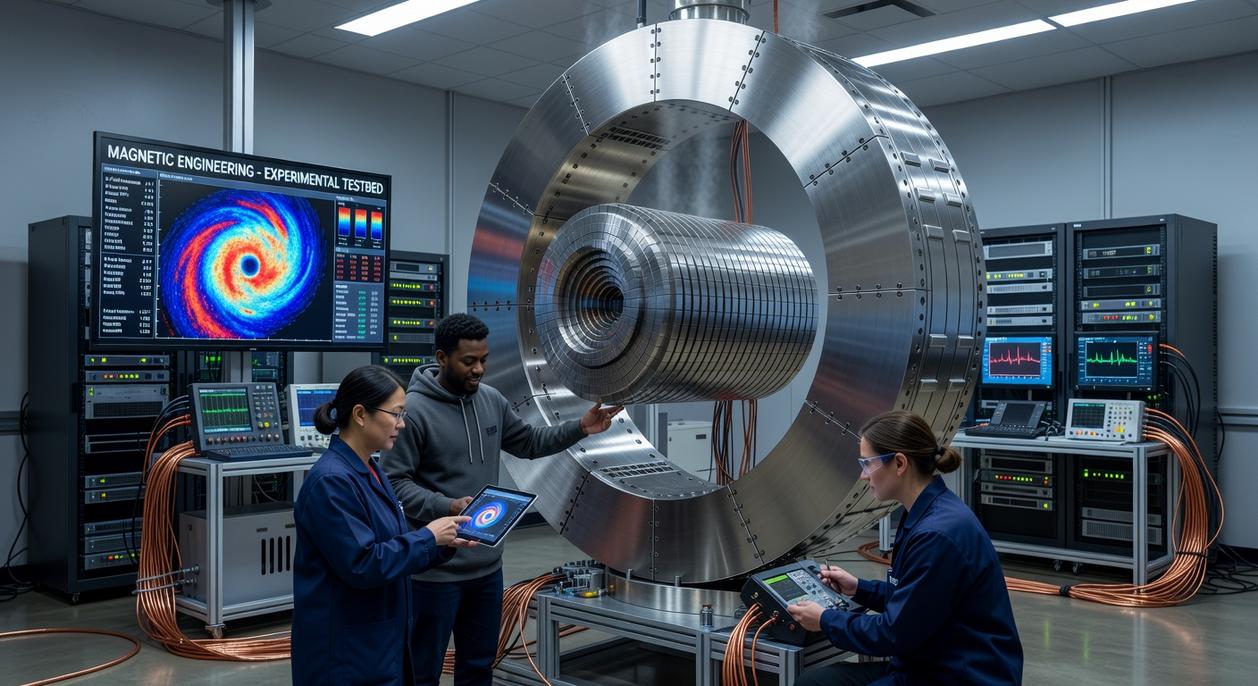
First, let’s tackle Lenz’s Law—the rule that says an induced current will oppose the change that created it. When a magnet moves past a conductive material, it generates swirling electrical loops called eddy currents. Those currents create their own magnetic field, pushing back like an invisible brake. It’s why a magnet falls slowly through a copper tube (a favorite physics demo, and yes, it feels like sci‑fi).
Practical tip: If you’re building rotating hardware, reduce eddy currents by using laminated cores—thin insulated layers of metal instead of one solid block. This limits current loops and cuts heat loss (U.S. DOE notes laminations significantly reduce core losses in motors).
Next, cogging torque—that jerky “snap” when rotor magnets align with stator teeth. It’s common in permanent magnet motors and wastes energy overcoming those preferred positions. Some argue it’s negligible in small systems. In reality, even minor cogging can ruin precision builds. Skewing stator slots or adjusting magnet spacing smooths rotation.
Finally, hysteresis loss—energy lost as heat when magnetic materials repeatedly magnetize and demagnetize. Think of it like bending a paperclip back and forth; energy dissipates each cycle. Choose low-hysteresis materials (like silicon steel) to minimize this drain.
These effects often surface in mag engine development challenges, where theory meets stubborn physical limits (yes, even Tony Stark would need better laminations).
The Material Question: Durability, Cost, and the Limits of Magnets
First, let’s clear up a myth: permanent magnets aren’t actually permanent. Demagnetization—the gradual loss of magnetic strength—happens when materials face high heat (reaching the Curie point, where magnetic order breaks down), repeated physical shock, or strong opposing magnetic fields. In my view, this alone makes “forever power” claims feel more sci‑fi than science (sorry, Tony Stark).
On top of that, the cost of power is no joke. High-strength rare-earth magnets like neodymium and samarium-cobalt rely on complex global supply chains and volatile mining markets. According to the U.S. Geological Survey, rare-earth supply is geographically concentrated, which drives price swings and geopolitical risk. Building a powerful engine around these materials would be prohibitively expensive, especially at scale.
Then there’s brittleness. These magnets are ceramic-like—hard but fragile. They chip, crack, and resist machining under stress. That creates serious mag engine development challenges when you’re designing systems that vibrate, spin, or heat up.
Some argue material science will solve all this. Maybe. But right now, durability limits, high costs, and manufacturing headaches make me skeptical that magnets alone are the shortcut people hope for.
The Stability Paradox
At the heart of the “magnetic motor” dream lies Earnshaw’s Theorem—a physics principle stating that you can’t achieve stable levitation or continuous motion using only static magnetic fields. In plain terms, magnets naturally settle into equilibrium, a balance point where attractive and repulsive forces cancel out. That balance halts motion (like a marble rolling to the bottom of a bowl).
Some argue clever geometry can bypass this. But even in mag engine development challenges, redesigned arrays still get “stuck.” The system finds a new balance point. Physics doesn’t blink.
Then there’s the idea of magnetic “shielding.” True shields don’t block fields; they redirect them. Redirected fields often create new drag or attraction zones—trading one stall point for another.
- If continuous rotation were possible without input, we’d see it powering cities already.
So what’s next? Add external energy—typically electricity driving electromagnets. But that transforms the concept into a standard electric motor, not a self-sustaining engine. Continuous motion demands continuous input.
From Impossible Engines to Real-World Innovations
The dream of magnetic engines faced mag engine development challenges that couldn’t be ignored: unbreakable laws of physics, unavoidable energy losses from drag and hysteresis, and the hard limits of magnetic materials. What once seemed like failure became fuel for discovery. Pushing against those barriers deepened our understanding of magnetism and accelerated breakthroughs in materials science.
That pivot led to today’s ultra-efficient brushless DC motors—smart systems that pair permanent magnets with precisely controlled electromagnets. They quietly power PC cooling fans, hard drives, and even the haptic feedback inside premium gaming controllers, turning “impossible” ideas into everyday innovation.
 Founder & CEO
Ask Koralia Tornhanna how they got into mag-based game engine explorations and you'll probably get a longer answer than you expected. The short version: Koralia started doing it, got genuinely hooked, and at some point realized they had accumulated enough hard-won knowledge that it would be a waste not to share it. So they started writing.
What makes Koralia worth reading is that they skips the obvious stuff. Nobody needs another surface-level take on Mag-Based Game Engine Explorations, Hot Topics in Gaming, Core Mechanics and Playstyles. What readers actually want is the nuance — the part that only becomes clear after you've made a few mistakes and figured out why. That's the territory Koralia operates in. The writing is direct, occasionally blunt, and always built around what's actually true rather than what sounds good in an article. They has little patience for filler, which means they's pieces tend to be denser with real information than the average post on the same subject.
Koralia doesn't write to impress anyone. They writes because they has things to say that they genuinely thinks people should hear. That motivation — basic as it sounds — produces something noticeably different from content written for clicks or word count. Readers pick up on it. The comments on Koralia's work tend to reflect that.
Founder & CEO
Ask Koralia Tornhanna how they got into mag-based game engine explorations and you'll probably get a longer answer than you expected. The short version: Koralia started doing it, got genuinely hooked, and at some point realized they had accumulated enough hard-won knowledge that it would be a waste not to share it. So they started writing.
What makes Koralia worth reading is that they skips the obvious stuff. Nobody needs another surface-level take on Mag-Based Game Engine Explorations, Hot Topics in Gaming, Core Mechanics and Playstyles. What readers actually want is the nuance — the part that only becomes clear after you've made a few mistakes and figured out why. That's the territory Koralia operates in. The writing is direct, occasionally blunt, and always built around what's actually true rather than what sounds good in an article. They has little patience for filler, which means they's pieces tend to be denser with real information than the average post on the same subject.
Koralia doesn't write to impress anyone. They writes because they has things to say that they genuinely thinks people should hear. That motivation — basic as it sounds — produces something noticeably different from content written for clicks or word count. Readers pick up on it. The comments on Koralia's work tend to reflect that.