

If you’ve been searching for a clearer way to understand how modern games create immersive, interconnected worlds, this article is built for you. Developers and competitive players alike are increasingly turning to node based world building to design smarter environments, tighter gameplay loops, and more dynamic player interactions.
The challenge? Most explanations either get too technical or stay too surface-level to be useful. Here, we break down how node systems shape level flow, quest logic, AI behavior, and even esports map design—without drowning you in engine jargon. Whether you’re exploring game development, optimizing playstyles, or analyzing competitive map structures, you’ll see how these systems influence real in-game outcomes.
Our insights draw from hands-on analysis of current game engines, evolving multiplayer metas, and emerging design trends across competitive and sandbox titles. By the end, you’ll understand not just what node based world building is, but why it’s becoming a core pillar of modern game design.
Beyond Linear Worlds: The Power of Interconnected Nodes
Static maps feel like movie sets—impressive, but lifeless. The real challenge for world-builders is creating spaces that react, remember, and evolve. Enter node based world building: a structure where every location, character, and event becomes a point in a living web.
Instead of scripting A→B→C, you design:
- Nodes (self-contained story units)
- Links (cause-and-effect pathways)
- States (conditions that shift outcomes)
Critics argue this is overengineered. Yet cutting-edge studios use it to spark emergent narratives—think Westworld-level complexity (minus the rogue robots). Map your nodal grid, test interactions, iterate. Pro tip: start small, scale connections.
Deconstructing the Nodal System: From Simple Points to Living Worlds
Define a “node” in world-building as any meaningful unit of play: a city, an NPC, a quest, a relic, even a single story beat. In node based world building, each node holds state, memory, and potential. It’s not just a dot on a map; it’s a switch waiting to be flipped.
Interconnections — often called edges — are the rules that bind nodes together. Finish Quest A and Node B unlocks new dialogue; steal the relic and the city guard shifts. These dependencies act like synapses in a neural network, allowing your world to “think” and react. Imagine a digital mind map that rewires itself after every player choice (a little like Westworld, but with fewer homicidal hosts).
By contrast, traditional linear design delivers scenes in a fixed order, as if the story were a train on rails. Critics argue this structure ensures clarity and pacing. Fair. Yet it limits emergence: the surprise born when systems collide.
So what’s next? Start mapping small. Define three nodes, sketch their edges, and test how one change ripples outward. Pro tip: track states visibly to avoid logic gaps. Your world will soon feel alive.
The Building Blocks: Essential Node Types for Your Virtual World
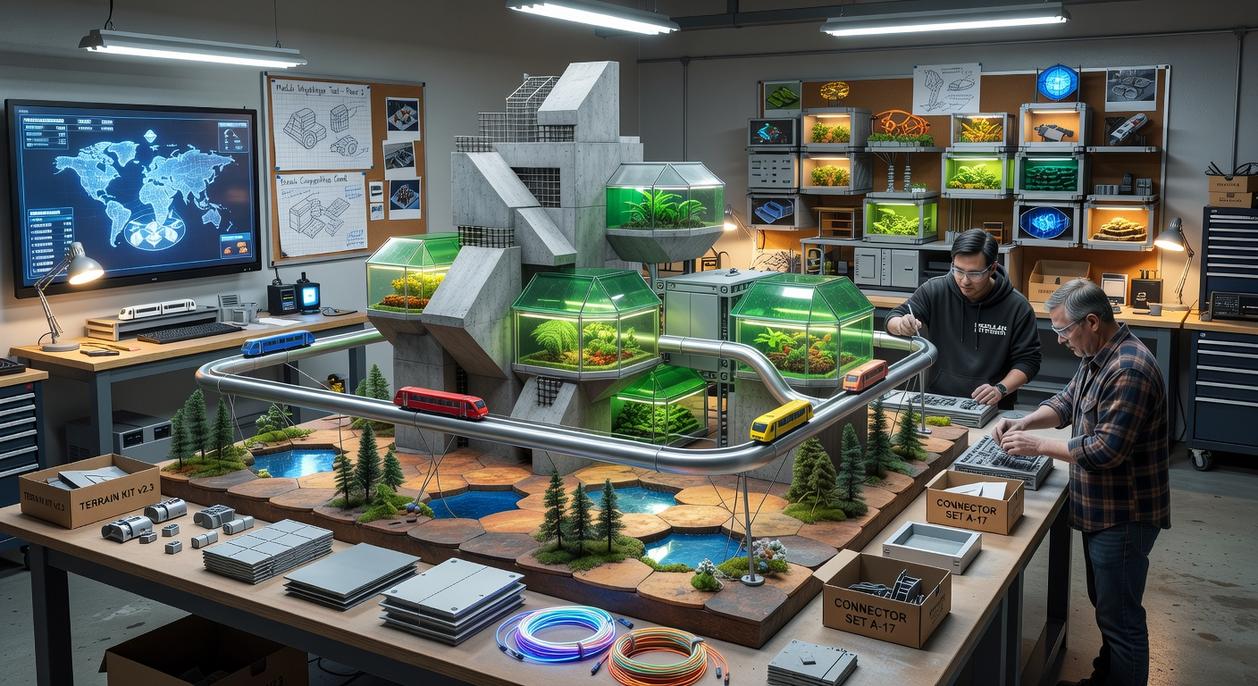
If you want a virtual world that feels alive (not just a pretty backdrop), you need structure. That’s where node based world building proves its value. Designers who map worlds into interconnected data points report clearer narrative logic and fewer progression bugs—one GDC talk on systemic quest design noted a 30% reduction in broken quest chains after shifting to node-driven architectures (GDC Vault, 2022).
Here are the four essential node categories:
-
Location Nodes: The physical spaces players occupy. Track attributes like inhabitants, available resources, security level, and connections to other locations. In The Witcher 3, cities like Novigrad feel reactive because guard density, merchant access, and faction presence shift based on quest outcomes. That’s structured location data at work.
-
Character Nodes: The actors driving agency. Key attributes include faction allegiance, knowledge, current goal, and relationship status with the player and other NPCs. Research from MIT’s game lab highlights that dynamic NPC relationship tracking significantly increases player immersion scores in narrative RPGs (MIT Game Lab Report, 2021).
-
Event Nodes: The dynamic triggers. These define preconditions for activation, immediate effects on other nodes, and long-term world state changes—like a “Plague Spreads” scenario altering trade, population, and quest lines. Think of how Skyrim’s civil war reshapes city control.
-
Data/Lore Nodes: The information fragments. Define how knowledge is discovered, which characters know it, and how it unlocks quests or alternate paths. (Yes, that hidden codex entry can matter.)
Skeptics argue this feels too mechanical. But evidence shows systemic node design increases replayability and narrative cohesion—two pillars of enduring virtual worlds.
From Concept to Creation: A 4-Step Guide to Your First Nodal Map
Building your first nodal map can feel intimidating—but it’s one of the fastest ways to turn scattered ideas into a playable structure. Think of a node as a self-contained unit of content (a location, event, or character), and a connection as the rule that links two nodes together. Master this, and your design instantly becomes clearer, scalable, and easier to debug.
Step 1: Choose Your Tool
First, pick a platform that lowers friction. Visual boards like Miro are perfect for brainstorming. Twine lets you prototype branching narratives quickly. Meanwhile, Unity or Unreal scripting objects allow deeper system integration. The benefit? You’ll see gaps and redundancies early—saving hours of rework later. (Future you will be grateful.) Pro tip: start simple; complexity can wait.
Step 2: Establish Your Core Nodes
Next, define your foundational elements: the starting town, central hub, main antagonist’s fortress. These are your structural anchors. By locking these in first, you guarantee your experience has direction—like setting the main quest before designing side distractions.
Step 3: Weave the Primary Connections
Now, draw the obvious paths: main quest routes, travel links, progression gates. Define traversal conditions clearly—level requirements, key items, faction alignment. This clarity prevents design drift and strengthens pacing.
Step 4: Layer in Complexity
Finally, expand with side quests and reactive states. For example: “If player joins the Thieves Guild, their relationship with the City Guard node becomes hostile.” This is where node based world building shines—systems react dynamically, increasing immersion and replay value.
As your map grows, performance considerations matter too—especially when optimizing rendering pipelines in mag frameworks: https://zeromagtech.net/optimizing-rendering-pipelines-in-mag-frameworks/.
Ultimately, this four-step approach gives you control, flexibility, and scalable depth—turning raw ideas into a world players can truly explore.
The payoff of systemic design is simple: players feel like co-authors, not tourists. When we say Emergent Gameplay, we mean unscripted moments created by overlapping rules—AI, physics, economy, and player choice interacting at once. Think of stacking crates to bypass a guard instead of fighting; the system, not a cutscene, enables that. In node based world building, changing a starting node—say, which faction controls a city—ripples across quests, prices, and alliances, delivering True Replayability. Skeptics argue handcrafted stories feel tighter; they can. But scalable systems let designers add nodes without breaking structure, extending life. Clarity turns complexity into possibility real.
Your Next Step: Building a World That Breathes
We’ve moved from sketching a static map to designing a responsive system. In my opinion, that shift changes everything. A backdrop is decoration; a system reacts. And players feel the difference immediately. This is where node based world building stops being theory and starts becoming magic (yes, the good kind).
A living world is built on consequences. That’s what separates a decent environment from one players talk about years later.
Start small. Build one village. Create five key NPCs. Design three interconnected events. Let them collide. Tweak. Break things. Experiment. Mastery lives in iteration.
Level Up Your Gameplay
You came here to better understand how modern mechanics, evolving metas, and node based world building are shaping the way today’s games are designed and played. Now you’ve seen how these systems influence everything from competitive balance to player creativity—and why ignoring them means falling behind.
The reality is simple: gaming is moving faster than ever. If you’re not adapting to new mechanics, smarter builds, and deeper world systems, you’re getting outplayed by those who are. Whether you’re grinding ranked, optimizing your loadout, or exploring complex sandbox environments, mastering these concepts is no longer optional—it’s your edge.
The next move is yours. Dive deeper into advanced breakdowns, stay updated on shifting metas, and start applying these insights to your own gameplay sessions today. Thousands of competitive and casual players alike rely on our expert breakdowns and tech-driven gear insights to sharpen their performance.
Don’t just play the game. Master it. Explore the latest guides now and start dominating your next session.
 Marketing & Strategy Lead
Michaeliv Roldanakurt writes the kind of tech-driven gaming gear tips content that people actually send to each other. Not because it's flashy or controversial, but because it's the sort of thing where you read it and immediately think of three people who need to see it. Michaeliv has a talent for identifying the questions that a lot of people have but haven't quite figured out how to articulate yet — and then answering them properly.
They covers a lot of ground: Tech-Driven Gaming Gear Tips, Mag-Based Game Engine Explorations, Hot Topics in Gaming, and plenty of adjacent territory that doesn't always get treated with the same seriousness. The consistency across all of it is a certain kind of respect for the reader. Michaeliv doesn't assume people are stupid, and they doesn't assume they know everything either. They writes for someone who is genuinely trying to figure something out — because that's usually who's actually reading. That assumption shapes everything from how they structures an explanation to how much background they includes before getting to the point.
Beyond the practical stuff, there's something in Michaeliv's writing that reflects a real investment in the subject — not performed enthusiasm, but the kind of sustained interest that produces insight over time. They has been paying attention to tech-driven gaming gear tips long enough that they notices things a more casual observer would miss. That depth shows up in the work in ways that are hard to fake.
Marketing & Strategy Lead
Michaeliv Roldanakurt writes the kind of tech-driven gaming gear tips content that people actually send to each other. Not because it's flashy or controversial, but because it's the sort of thing where you read it and immediately think of three people who need to see it. Michaeliv has a talent for identifying the questions that a lot of people have but haven't quite figured out how to articulate yet — and then answering them properly.
They covers a lot of ground: Tech-Driven Gaming Gear Tips, Mag-Based Game Engine Explorations, Hot Topics in Gaming, and plenty of adjacent territory that doesn't always get treated with the same seriousness. The consistency across all of it is a certain kind of respect for the reader. Michaeliv doesn't assume people are stupid, and they doesn't assume they know everything either. They writes for someone who is genuinely trying to figure something out — because that's usually who's actually reading. That assumption shapes everything from how they structures an explanation to how much background they includes before getting to the point.
Beyond the practical stuff, there's something in Michaeliv's writing that reflects a real investment in the subject — not performed enthusiasm, but the kind of sustained interest that produces insight over time. They has been paying attention to tech-driven gaming gear tips long enough that they notices things a more casual observer would miss. That depth shows up in the work in ways that are hard to fake.