

Looking for a clearer way to understand how modern games create immersive, interconnected worlds? This article’s got you covered. Developers and competitive players are turning to Node based world building to design smarter environments, tighter gameplay loops, and more dynamic player interactions. It’s reshaping how studios approach level design.
The challenge? Most explanations either get too technical or stay too surface-level to be useful. We’re breaking down how node systems shape level flow, quest logic, AI behavior, and esports map design, no engine jargon required. You’ll see how these systems influence real in-game outcomes, whether you’re exploring game development, optimizing playstyles, or analyzing competitive map structures.
We’ve dug into how today’s game engines actually work, what’s shifting in multiplayer competition, and where design’s headed across everything from esports to open worlds. Node-based world building matters, and you’ll understand why. But here’s the thing: it’s not some niche feature anymore. It’s becoming fundamental to how games get built, reshaping everything from prototype speed to final asset pipelines.
Beyond linear worlds: the power of interconnected nodes
Static maps feel like movie sets, impressive on the surface, but hollow. The real challenge for world-builders is creating spaces that actually respond, that remember what happened there, that change over time. Node-based world building does exactly that. It’s a structure where every location, character, and event becomes a point in a living web. Each node connects to others. Pull one thread, and the whole system shifts.
Instead of scripting A→B→C, you design:
- Nodes (self-contained story units)
- Links (cause-and-effect pathways)
- States (conditions that shift outcomes)
Critics say it’s overengineered. But top studios are using it to spark emergent narratives—think Westworld-level complexity, except without the rogue robots problem. Map your nodal grid. Test interactions. Iterate. Start small. Scale connections.
Deconstructing the nodal system: from simple points to living worlds
A “node” in world-building is any meaningful unit of play, a city, an NPC, a quest, a relic, even a single story beat. Each node holds state, memory, and potential. It’s a switch waiting to be flipped.
Interconnections, the edges binding nodes together, are the rules that make your world responsive. Complete Quest A, and Node B unlocks new dialogue. Steal the relic. The city guard shifts. These dependencies work like synapses in a neural network, letting your world think and react to what players do. It’s a digital mind map that rewires itself after every choice. (Think Westworld, except with fewer homicidal hosts.) Every decision cascades.
By contrast, traditional linear design delivers scenes in a fixed order, as if the story were a train on rails. Critics argue this structure ensures clarity and pacing. Fair. Yet it limits emergence: the surprise born when systems collide.
So what’s next? Start small. Three nodes, maybe four. Sketch the edges between them, then test it: change one thing and watch what ripples outward. This is where it gets real, where you’ll spot the places your logic actually breaks. Track your states visibly (and I mean write them down, not just squint at them on screen) so you don’t miss a gap hiding in the quiet parts. Watch long enough and the whole thing starts to breathe differently, you’ll feel when something’s wrong before you can name it.
The building blocks: essential node types for your virtual world
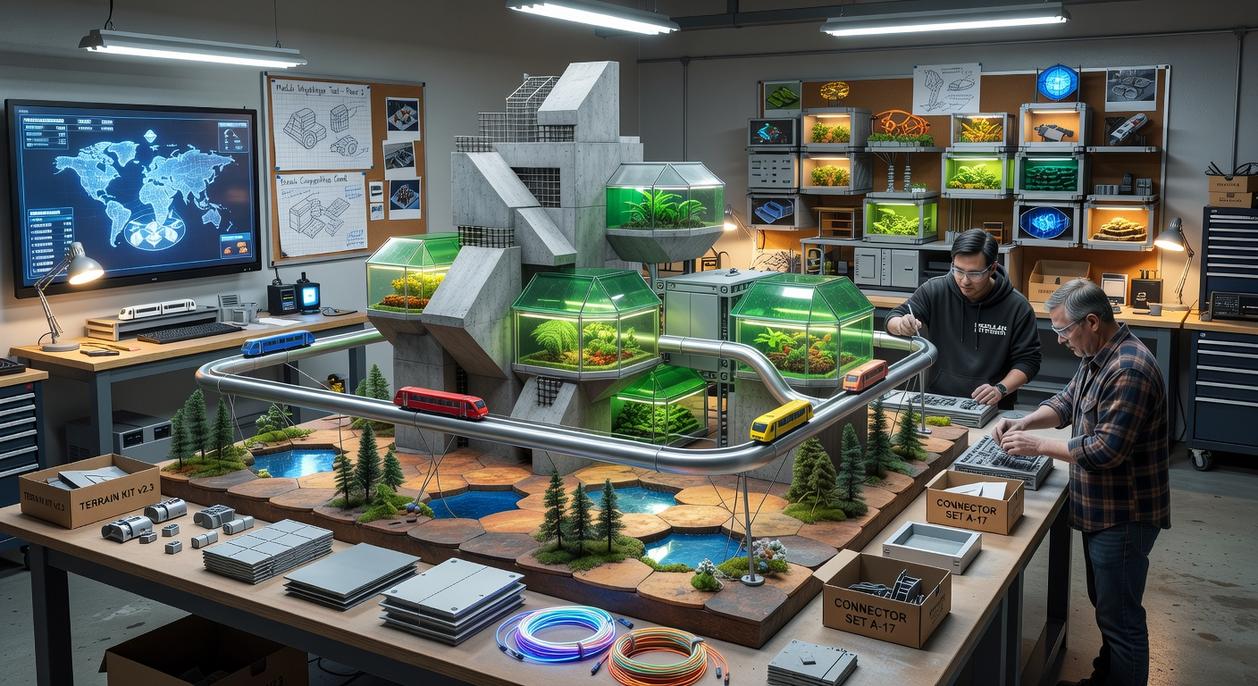
If you want a virtual world that actually feels alive, not just window dressing, you need structure. That’s where Node based world building comes in. Designers who map worlds into interconnected data points get clearer narrative logic. Fewer progression bugs, too. One GDC talk on systemic quest design noted a 30% reduction in broken quest chains after shifting to node-driven architectures (GDC Vault, 2022). It works.
Here are the four essential node categories:
- Location Nodes: The physical spaces players occupy. You’ll want to track inhabitants, available resources, security level, and connections to other locations. In The Witcher 3, cities like Novigrad feel reactive because guard density, merchant access, and faction presence shift based on quest outcomes. That’s structured location data at work. It’s not fancy, it’s just smart design.
- Character Nodes: The actors driving agency. Key attributes include faction allegiance, knowledge, current goal, and relationship status with the player and other NPCs. Research from MIT’s game lab found that dynamic NPC relationship tracking boosts player immersion scores in narrative RPGs (MIT Game Lab Report, 2021).
- Event Nodes: The dynamic triggers. These define preconditions for activation, immediate effects on other nodes, and long-term world state changes, like a “Plague Spreads” scenario that alters trade, population, and quest lines. Skyrim’s civil war does something similar: it reshapes city control in ways that ripple outward.
- Data/Lore Nodes are the information fragments scattered throughout the game world. They determine how you discover story beats, which characters hold crucial secrets, and what paths open up when you find them. That hidden codex entry? It can absolutely matter. A journal tucked in a corner, an NPC’s offhand comment, a decoded message, they shape quest availability and branch your narrative in unexpected directions. You find one piece, and suddenly the whole next sequence unfolds differently. It’s why they’re worth hunting for.
Skeptics argue this feels too mechanical. But evidence shows systemic node design increases replayability and narrative cohesion, two pillars of enduring virtual worlds.
From concept to creation: a 4-step guide to your first nodal map
Building your first nodal map can feel intimidating. But it’s one of the fastest ways to turn scattered ideas into something playable. A Node is just a self-contained unit of content, a location, event, or character. A Connection is the rule that links two nodes together. Get this right, and your design instantly becomes clearer. Scalable. Easier to debug.
Step 1: choose your tool
Start with a platform that doesn’t get in your way. Miro’s great for visual brainstorming. Twine handles branching narratives without the overhead. Need deeper integration? Unity or Unreal scripting objects will do it. You’ll spot gaps and redundancies before they become expensive problems. Early catch. That’s the payoff. Keep it simple at first, complexity can always come later, and you’ll know when you actually need it.
Step 2: establish your core nodes
Next, define your foundational elements: the starting town, central hub, main antagonist’s fortress. These are your structural anchors. Lock them in first, and you guarantee your experience has direction, like plotting the main quest before you get lost designing side distractions.
Step 3: weave the primary connections
Map out your main quest routes, travel links, and progression gates. Be explicit about traversal conditions, level requirements, key items, faction alignment. Why? Because vague routes let design drift. You’ll patch pacing problems for months if you don’t nail this upfront. Specificity kills scope creep. Know exactly where players can go at level 5, level 15, level 30. Know which story beats gate which zones. Know whether a player needs the Obsidian Seal from House Vorn or can sidestep it entirely. The tighter these rules, the tighter your pacing. It’s that simple.
Step 4: layer in complexity
Finally, expand with side quests and reactive states. Join the Thieves Guild and watch the City Guard node flip hostile instantly. That’s node-based world building working as it should. Systems don’t just respond, they recalibrate around your choices. The world adapts. Immersion climbs. Replay value spikes. You’re not watching a story unfold in sequence; you’re watching it reshape itself based on what you actually did, and linear narratives can’t replicate that kind of responsiveness.
As your map grows, performance considerations matter too—especially when optimizing rendering pipelines in mag frameworks: https://zeromagtech.net/optimizing-rendering-pipelines-in-mag-frameworks/.
This four-step approach gives you control, flexibility, and the depth that actually scales—transforming raw ideas into worlds players can explore.
The payoff of systemic design is simple: players feel like co-authors, not tourists. Emergent Gameplay means unscripted moments. It’s what happens when overlapping rules, AI, physics, economy, and player choice collide at once. Stacking crates to bypass a guard instead of fighting, the system enables that, not a cutscene. With node-based world building, you can change a starting node (say, which faction controls a city), and the ripple spreads everywhere: quests shift, prices move, alliances rewrite themselves. That’s True Replayability. Sure, handcrafted stories feel tighter sometimes. They can. But scalable systems let designers add nodes without breaking what’s already there, and that extends the game’s life. Clarity turns complexity into possibility. Real possibility.
Your next step: building a world that breathes
We’ve moved from sketching a static map to designing a responsive system. That shift changes everything. A backdrop is decoration; a system reacts. Players feel the difference immediately. This is where node based world building stops being theory and becomes something else entirely, something that works, that breathes, that catches players off guard in the best way.
A living world is built on consequences. That’s what separates a decent environment from one players talk about years later.
Start small. Build one village. Create five key NPCs. Design three interconnected events. Let them collide. Tweak. Break things. Experiment. Mastery lives in iteration.
Level up your gameplay
You came here to understand how modern mechanics, shifting metas, and node-based world building actually shape game design today. And you’ve seen it. These systems ripple through competitive balance, player creativity, every layer of how games breathe. Ignore them? You’re immediately at a disadvantage. Designers who don’t grasp these tools don’t build experiences that stick.
Gaming moves fast. Really fast. And if you’re not keeping up with new mechanics, sharper builds, and the deeper systems that matter, you’re losing to people who are. That’s the reality now. Whether you’re pushing ranked, tweaking your loadout, or diving into a massive sandbox world, you’ve got to understand how these systems work. Not because it’s trendy. Because the players who master them are the ones winning matches, tournaments, everything that counts.
Your next step? Dive into advanced breakdowns, keep pace with shifting metas, and start applying these insights during your gameplay sessions today. Thousands of competitive and casual players rely on our expert breakdowns and tech-driven gear insights to sharpen their performance.
Don’t just play the game. Master it. Explore the latest guides now and start dominating your next session.
 Marketing & Strategy Lead
Michaeliv Roldanakurt writes the kind of tech-driven gaming gear tips content that people actually send to each other. Not because it's flashy or controversial, but because it's the sort of thing where you read it and immediately think of three people who need to see it. Michaeliv has a talent for identifying the questions that a lot of people have but haven't quite figured out how to articulate yet — and then answering them properly.
They covers a lot of ground: Tech-Driven Gaming Gear Tips, Mag-Based Game Engine Explorations, Hot Topics in Gaming, and plenty of adjacent territory that doesn't always get treated with the same seriousness. The consistency across all of it is a certain kind of respect for the reader. Michaeliv doesn't assume people are stupid, and they doesn't assume they know everything either. They writes for someone who is genuinely trying to figure something out — because that's usually who's actually reading. That assumption shapes everything from how they structures an explanation to how much background they includes before getting to the point.
Beyond the practical stuff, there's something in Michaeliv's writing that reflects a real investment in the subject — not performed enthusiasm, but the kind of sustained interest that produces insight over time. They has been paying attention to tech-driven gaming gear tips long enough that they notices things a more casual observer would miss. That depth shows up in the work in ways that are hard to fake.
Marketing & Strategy Lead
Michaeliv Roldanakurt writes the kind of tech-driven gaming gear tips content that people actually send to each other. Not because it's flashy or controversial, but because it's the sort of thing where you read it and immediately think of three people who need to see it. Michaeliv has a talent for identifying the questions that a lot of people have but haven't quite figured out how to articulate yet — and then answering them properly.
They covers a lot of ground: Tech-Driven Gaming Gear Tips, Mag-Based Game Engine Explorations, Hot Topics in Gaming, and plenty of adjacent territory that doesn't always get treated with the same seriousness. The consistency across all of it is a certain kind of respect for the reader. Michaeliv doesn't assume people are stupid, and they doesn't assume they know everything either. They writes for someone who is genuinely trying to figure something out — because that's usually who's actually reading. That assumption shapes everything from how they structures an explanation to how much background they includes before getting to the point.
Beyond the practical stuff, there's something in Michaeliv's writing that reflects a real investment in the subject — not performed enthusiasm, but the kind of sustained interest that produces insight over time. They has been paying attention to tech-driven gaming gear tips long enough that they notices things a more casual observer would miss. That depth shows up in the work in ways that are hard to fake.