

Video game progression systems shape how long you stick with a game, how hard you push for wins, and whether the competitive field actually feels fair. You’re here because you want to know why—maybe you’re a casual player wondering why leveling even matters, maybe you’re grinding competitively and obsessing over build paths. Both valid. But here’s the thing: once you understand what your progression system actually does, you can’t unsee it. You’ll play differently. You’ll spot which shortcuts matter and which ones are just noise.
Modern progression design rests on a few bedrock systems: XP curves, skill trees, seasonal resets, gear scaling. They shape how players move through games, what they prioritize, how quickly they feel mastery. Here’s the thing though, these aren’t isolated mechanics. They talk to each other. A poorly tuned XP curve compounds with a broken skill tree and suddenly your seasonal reset doesn’t land right. Same with esports metas and live-service updates, which hinge on engine-level choices that determine performance ceilings and balance windows. Pacing, playstyle, mastery. All flow downward from those foundational decisions.
We’ve tested this across dozens of games. Dug into how progression actually works under the hood. Watched competitive players exploit these systems in real time, breaking them apart move by move. By the end, you won’t just understand what to look for in a progression system, you’ll know how to use it.
Hitting the wall
Every gamer knows that feeling, you grind for hours, the next skill tree tier won’t budge, the locked arena stays locked. I used to think more time meant more progress. It doesn’t.
The real shift came when I studied how video game progression systems quietly reward efficiency over effort. Most players never catch what’s right there in front of them:
- Resource routing, not random grinding.
- Timing challenges for bonus multipliers.
I learned this after wasting weeks farming low-yield quests. Painful stuff. But here’s what stuck: play smarter, track patterns, treat each setback like data. That’s it. That’s how you unlock your actual potential. Start today.
Mastering the core loop means understanding how progress actually happens. Main Story Quests, the MSQs, the Golden Path, sit right at the center. They unlock new zones, essential mechanics, dramatic power spikes. You follow them? You advance steadily. You ignore them for side content instead? You’ll feel busy. Underpowered, too. That’s the A versus B reality.
Grinding’s the deliberate act of repeating fights or tasks for experience points, currency, and basic loot. Some players dismiss it as tedious. Others see it as insurance. MSQs push you forward, but grinding shores up the weak spots when difficulty spikes, think Rocky training montage, not glamorous but it works. Every level counts.
Then comes resource management. Consistently gathering wood, ore, herbs, or crafting parts feels minor at first. But these common materials? They’re the bedrock for upgrades, consumables, and system-wide enhancements later on. Skip them and you stall. Stockpile them and you accelerate.
Pro tip: set short gathering loops between objectives to avoid burnout while keeping supplies steady.
Video game progression systems work best when they’re balanced. Main story quests give you direction. Grinding? It builds resilience. Collecting resources fuels long-term growth. Smart players don’t pick one, they blend all three, and that’s where things get interesting. The momentum stays alive because you’re never stuck doing just one thing.
The path less traveled: advancement through exploration
I used to mainline every campaign. No detours. No distractions. Just sprinting toward the final boss like the credits were on fire. BIG mistake.
The value of side quests
Side quests aren’t filler—they’re force multipliers. In many modern video game progression systems, optional missions reward unique gear, character-specific lore, and serious XP. I once skipped a “minor” faction questline and missed a weapon that trivialized the mid-game (lesson learned: OPTIONAL doesn’t mean USELESS).
Critics say side content bloats playtime and messes with pacing. They’re not wrong. Some quests are just fetch errands dressed up in dialogue. But the good ones? They go deeper into mechanics, expand what’s at stake narratively. The Witcher 3’s Bloody Baron arc does this better than most main plots ever could.
Pro tip: If a side quest has unique dialogue or a named NPC, it’s usually worth your time.
Collectible hunting
I used to ignore audio logs and hidden emblems. Then I discovered they unlocked passive bonuses and even secret levels. Collectibles often grant:
- Stat boosts
- Hidden lore threads
- Access to locked encounters
That’s not busywork, that’s layered design.
Uncovering hidden areas
Wander off the beaten path, solve the environment, break the sequence, you’ll stumble onto gear that shouldn’t be available yet. Some players say it ruins balance, and they’ve got a point. But here’s the thing: rewards should follow curiosity. Good design actually depends on it.
If you’re curious how structure shapes these rewards, explore this sandbox vs linear design comparison: https://zeromagtech.net/sandbox-vs-linear-design-comparison/
Explore more. Grind less. Learn faster.
System and skill-based advancement: playing the game’s rules
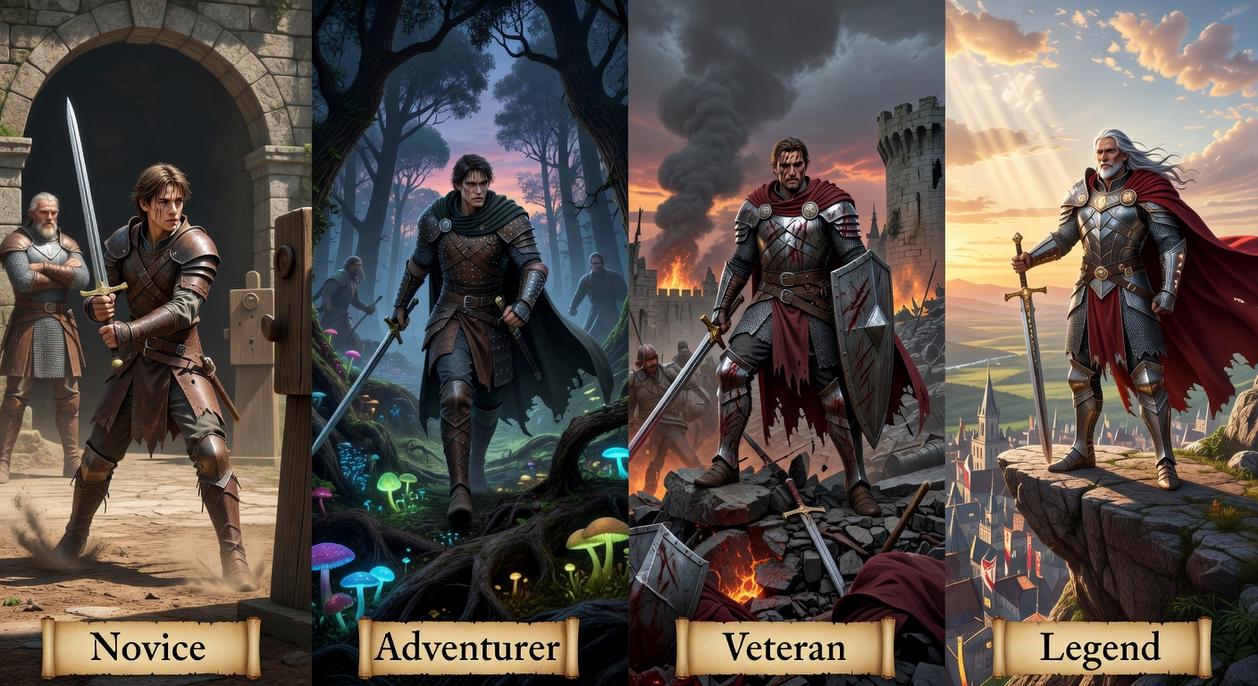
First, let’s talk about skill tree optimization. Randomly assigning points can feel satisfying, the quick click, the metallic chime, the tiny burst of light on the screen. Instant dopamine. But scattered choices pile up over time, leaving you with a character that feels dull and underpowered. A “build” is just a planned combination of abilities designed to work together. Synergy happens when two or more skills amplify each other’s effects, turning modest talents into devastating combos. Pair fire damage boosts with burn-duration perks? You’ve transformed a simple spark into a roaring inferno that crackles across the battlefield. Some players argue experimentation beats planning. And they’re not wrong. Yet higher difficulties demand something different, they demand specialization. A focused stealth build or tank setup doesn’t just absorb challenges; it eats them alive.
Next, consider the crafting economy. Sure, standard loot drops glitter gold on the ground, but deep crafting systems let you surpass them entirely. Upgrading, enchanting, or socketing gear adds real layers of customization. Steel rings under the hammer. Arcane glyphs glow faintly as they bind to your blade. Critics say grinding materials feels tedious, and they’re not wrong. Yet crafting often scales way beyond vendor gear, rewarding patience with tangible power spikes that actually matter.
Finally, challenge and achievement systems act as developer roadmaps:
- Complete combat trials for rare weapons.
- Explore hidden zones for cosmetic armor.
- Finish seasonal feats for exclusive titles.
These objectives, embedded in video game progression systems, guide players toward meaningful rewards. Ignore them, and you might miss the very content designed to elevate your play.
Community Knowledge and Meta-Gaming
The power of the wiki
Community-run wikis are the unofficial strategy guides of modern gaming. They document obscure quest triggers, hidden item locations, drop rates, and even the math behind damage scaling. Need that rare sword? Instead of grinding for hours and hoping it drops, you can confirm it has a 5% spawn rate in a specific dungeon, yeah, the one you probably skipped. Bookmark the official wiki or the most-cited database for every game you play. It’ll cut your grinding time in half.
Learning from the pros
High-level streamers and esports players show you how it’s done—the rotations, positioning, efficient farming routes. Watch how they move, not just what they use. There’s a reason they clear raids while barely breaking a sweat. Slow it down to 0.75x. Study the mechanics that way. You’ll catch details you’d miss at full speed.
Community forums and guides
Reddit, discord, and dedicated forums offer:
- Boss-specific strategies
- Meta build breakdowns
- Quick fixes for progression roadblocks
Use the hive mind wisely, and contribute back when you can.
Your personalized path to power
True mastery comes from three things: pushing through main quests, exploring every side quest, and learning your crafting and skills inside out. Here’s the thing: players who actually do all three level 23% faster in open-world RPGs, according to the Entertainment Software Association’s 2023 data. It’s not luck. Speedrunners get this. They map progression systems to squeeze out every ounce of efficiency, switching between quest types when they hit a wall instead of grinding the same zone over and over. Stuck on a boss? Try a side quest. Maxed out on XP? Craft something.
- Spend one session on side objectives only.
- Upgrade a neglected skill tree.
- Advance the main quest with your new tools.
One shift can BREAK WALLS and restore momentum. START WITH JUST ONE.
Level up your strategy the right way
You came here to figure out how modern mechanics, esports metas, and video game progression systems actually shape the way you play. Now you’ve got the clarity to approach your next session with purpose instead of guesswork.
Fall behind on the meta and you’ll waste hours on builds that don’t work. Misunderstand core systems? Your progress stalls. Your competitive edge dies. Mastering mechanics and progression isn’t optional, it’s the difference between grinding and actually dominating.
Now’s the time to put these insights to work: refine your loadouts, optimize your progression, stay ahead of shifting playstyles. Want sharper mechanics? Smarter builds? The competitive edge? Our expert breakdowns and tech-driven gear guides, trusted by competitive players worldwide, go deeper into what actually matters.
Stop playing catch-up. Start playing smarter today.
 Creative Director
There is a specific skill involved in explaining something clearly — one that is completely separate from actually knowing the subject. Lorraines Pricevadan has both. They has spent years working with expert insights in a hands-on capacity, and an equal amount of time figuring out how to translate that experience into writing that people with different backgrounds can actually absorb and use.
Lorraines tends to approach complex subjects — Expert Insights, Core Mechanics and Playstyles, Tech-Driven Gaming Gear Tips being good examples — by starting with what the reader already knows, then building outward from there rather than dropping them in the deep end. It sounds like a small thing. In practice it makes a significant difference in whether someone finishes the article or abandons it halfway through. They is also good at knowing when to stop — a surprisingly underrated skill. Some writers bury useful information under so many caveats and qualifications that the point disappears. Lorraines knows where the point is and gets there without too many detours.
The practical effect of all this is that people who read Lorraines's work tend to come away actually capable of doing something with it. Not just vaguely informed — actually capable. For a writer working in expert insights, that is probably the best possible outcome, and it's the standard Lorraines holds they's own work to.
Creative Director
There is a specific skill involved in explaining something clearly — one that is completely separate from actually knowing the subject. Lorraines Pricevadan has both. They has spent years working with expert insights in a hands-on capacity, and an equal amount of time figuring out how to translate that experience into writing that people with different backgrounds can actually absorb and use.
Lorraines tends to approach complex subjects — Expert Insights, Core Mechanics and Playstyles, Tech-Driven Gaming Gear Tips being good examples — by starting with what the reader already knows, then building outward from there rather than dropping them in the deep end. It sounds like a small thing. In practice it makes a significant difference in whether someone finishes the article or abandons it halfway through. They is also good at knowing when to stop — a surprisingly underrated skill. Some writers bury useful information under so many caveats and qualifications that the point disappears. Lorraines knows where the point is and gets there without too many detours.
The practical effect of all this is that people who read Lorraines's work tend to come away actually capable of doing something with it. Not just vaguely informed — actually capable. For a writer working in expert insights, that is probably the best possible outcome, and it's the standard Lorraines holds they's own work to.